Work · Proof
IOM · COMPASS
Making an international organisation recognisable online on a subject where every post carries weight.
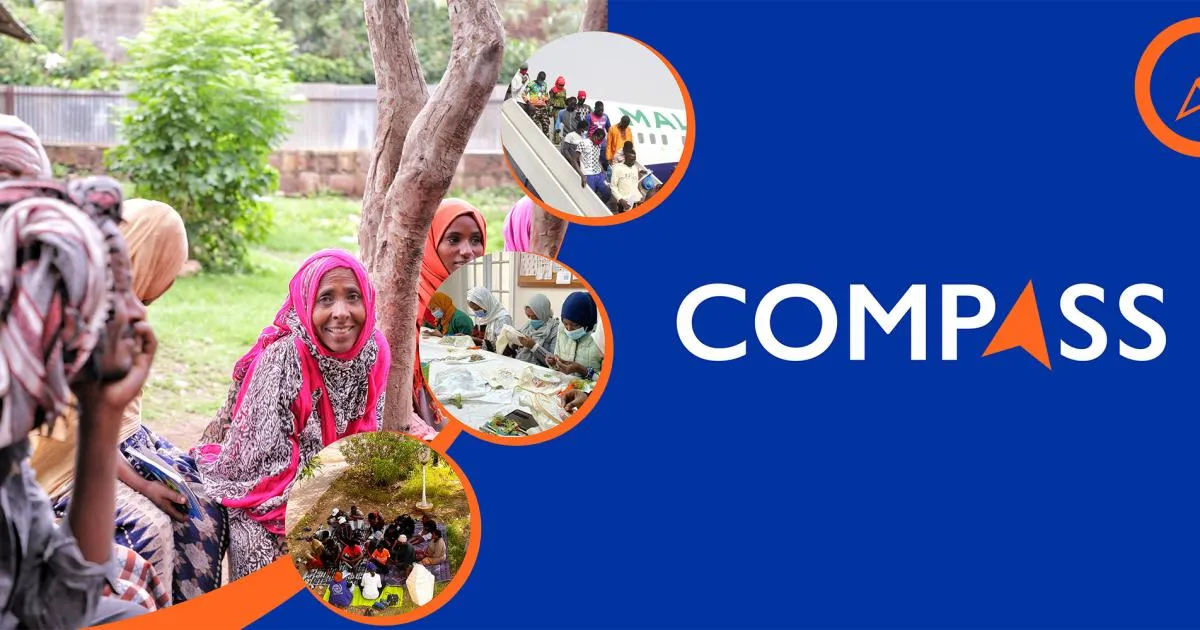
Nizzar Ben Chekroune was engaged by the International Organization for Migration (IOM) to create a digital strategy and articulate its brand online. For IOM's COMPASS programme he delivered branding, a social media strategy and reusable content templates.
- Relationship
- Engagement
- Role
- Digital strategy and online brand articulation; branding, social media strategy and content templates for COMPASS
- Period
- 2020
- Where
- International
- With
- International Organization for Migration (IOM), COMPASS programme
- Attribution
- Independent engagement
What IOM asked for
IOM was looking for someone to create its digital strategy and to articulate its brand online. I did that work. Within it, I worked on the COMPASS programme: its branding, its social media strategy and a set of reusable content templates.
COMPASS is one of IOM's programmes, with its own audiences, partners and reporting. It still has to read as IOM. The programme's identity and the institution's identity cannot drift apart without one of them losing credibility.
The visible request could be read as social media. I read it as a different question: how does an institution stay recognisably itself online when it speaks through a programme and through many hands?
An institution speaking through many hands
An international organisation does not post with one voice. Programme teams, country offices and partners all publish, each with their own urgency. Online, every one of those posts becomes the institution. On migration, where tone and framing carry consequences for real people, an inconsistent voice costs more than reach.
So the work was upstream of any single post: what the brand is online, what the programme says and in what order, and what has to stay fixed whoever is publishing.
Why the templates mattered
Strategy that lives only in a document stops working the day its author leaves. The reusable content templates were the part of the work designed to hold after me: a structure the COMPASS team could fill with new material while the programme stayed recognisable as IOM.
Templates also make quality checkable. When the structure is fixed, anyone reviewing a new post can see at a glance whether it belongs to the programme or has drifted away from it.
I treat that as the real deliverable. A branded post is an output. A system the team can repeat without me is a capability, and capability is what an institution keeps.
Where it sits
IOM belongs to the run of institutional work that started with UNIDO in Marrakech and continued with UNIDO's women's empowerment programme, NEPAD, OIF and UNITAR. Each time the subject changed. The question stayed the same: how an institution becomes legible and coherent in a digital environment.
IOM is where that question met its most sensitive subject: people on the move, described in public by the institution responsible for them.
What I take forward
I do not treat institutional social media as content production. I treat it as brand coherence under distributed authorship, and I leave behind the structure that keeps it coherent.
Sources
Related work
- UNIDO · Women's Empowerment / PWEResearch and digital strategy
- UNITARI took UNITAR from interest in blockchain to a working credential pilot, and trained the team in Geneva.
- OIF · Solidarité COVIDSpecial project manager: community management, and creator, interviewer, writer, director and editor of the interview series
- NEPAD · Infrastructure Project Preparation FacilityDigital marketing expert